
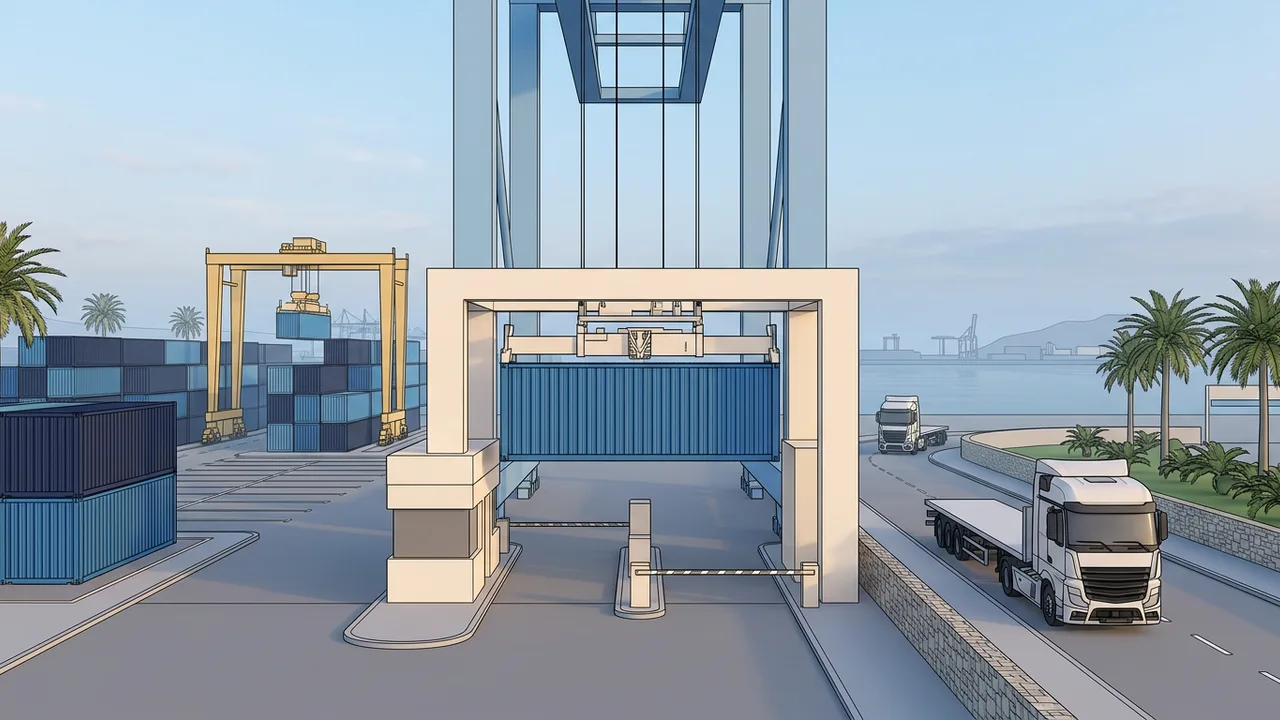
Demurrage vs detention is simpler than it sounds: demurrage is the daily charge for a shipping container that stays inside the port or terminal beyond its free days, and detention is the daily charge for a container that stays outside the terminal beyond its free days. In Kuwait, the UAE and Saudi Arabia, these appear as separate charges in the line's or terminal's tariff, so one container can earn both on a single shipment.
Demurrage vs detention: what each one means
Both charges exist because a shipping container is an asset that costs the owner money when it is not moving. The difference between demurrage and detention is where the container sits and who bills for the delay.
Demurrage applies while the container is inside the terminal or port. Detention applies while the container is with the consignee, forwarder or transporter outside the gate. The free time is separate in most Gulf tariffs.
What is demurrage?
Demurrage is the daily charge a terminal or shipping line applies when a laden container stays inside the port or terminal past the free days in the tariff.
For an import, the demurrage clock starts at discharge. The container gets its free days from that point. If it stays in the terminal beyond those free days, demurrage accrues for each extra day or part of a day until the container exits the terminal gate.
For an export, the demurrage clock starts when the laden container is gated into the terminal. If the container is sent in too early, or the vessel is late, and the container stays in the terminal beyond the free days, demurrage accrues until the container loads.
Free days vary by port, carrier, contract, equipment type and whether the container is dry, reefer or out of gauge. Some terminals count calendar days. Others count from a specific cut-off time. The desk should check the line's tariff and the terminal's schedule before quoting the job.
Who bills demurrage varies in Gulf ports. The terminal or the line through the local agent may issue the debit note. Either way, it lands in the job as a supplier cost.
Evidence for demurrage comes from the discharge list, the gate-out pass and the terminal system timestamps. These show whether the container was inside the terminal past free time.
What is detention?
Detention is the daily charge a shipping line applies when the container stays outside the terminal beyond the free days allowed for returning the empty.
For an import, the detention clock starts at gate-out. The consignee or transporter takes the container for unloading. After unpacking, the empty must go back to the depot or terminal stated on the release. If the empty returns late, detention accrues.
For an export, detention usually starts when an empty container is collected from the depot. It runs until the laden container is gated in at the port. Holding the empty too long before stuffing, or delaying the return of the loaded unit to the port, attracts detention.
The line sets detention free time separately from terminal demurrage free time. A common mistake is to assume the two clocks share one free period. In many Gulf tariffs they do not, unless the contract explicitly offers a combined pool.
Evidence for detention comes from the gate-out pass, the empty return receipt and the depot in-gate timestamp.
Demurrage vs detention at a glance
Demurrage and detention differ in where the container sits, who bills, and which milestone starts and ends each clock. The clean rule is that the container passing through the gate changes which clock runs.
| Criterion | Demurrage | Detention |
|---|---|---|
| Where the container is | Inside the port or terminal | Outside the terminal with the forwarder, transporter or consignee |
| Who charges | Terminal or line through the agent | Shipping line |
| Import clock starts | Discharge, after free days | Gate-out from the terminal |
| Import clock ends | Gate-out from the terminal | Empty return to the depot |
| Export clock starts | Laden gate-in to the terminal | Empty pickup from the depot |
| Export clock ends | Vessel loading | Laden gate-in to the terminal |
| Free time | Set by terminal or line tariff | Set by line tariff |
| Typical evidence | Discharge list, gate-out pass | Gate-out pass, empty return receipt |
The same container can earn both charges
An import container can earn demurrage and detention in sequence.
The vessel discharges the container. The terminal gives free days. If the container stays in the terminal past those free days, demurrage accrues. Once the forwarder or consignee collects it through the gate, demurrage stops and detention starts. If the empty returns late, detention accrues.
This is why a single shipment can show two separate debit notes. It is also why a delay at customs, or a missing delivery order, can start one charge and then push the next charge to run late.
The forwarder should not assume one charge replaces the other. Each sits on its own clock, with its own free days and its own billing party.
The milestones that start each clock
A job file becomes much easier to reconcile when the desk records the exact milestones.
Import milestones:
- Discharge: starts the demurrage free time.
- Gate-out: ends demurrage and starts detention.
- Empty return: ends detention.
Export milestones:
- Empty pickup: starts detention free time.
- Laden gate-in: ends detention and starts demurrage free time.
- Vessel loading: ends demurrage.
If any of these milestones is missing, or has only a date and no time, the desk cannot prove which side caused the delay. In the Gulf, gate passes and terminal receipts carry these timestamps. Keep them in the same folder as the job.
What a forwarder should check before free time ends
A short operational checklist helps.
- Read the line's tariff before quoting. Confirm the free days for demurrage and detention separately.
- Confirm whether free days are calendar days or working days, and what the cut-off time is.
- Check Gulf working days. Fridays, Saturdays, public holidays and Ramadan hours affect when gates and customs desks are open.
- If customs inspection or missing documents may delay gate-out, flag it at discharge, not after free time has passed.
- If the consignee cannot collect or return the container in time, request an extension from the line or terminal before the free time expires. Extensions are not guaranteed and may have their own conditions.
- Record the gate-out and empty return timestamps the same day they happen.
Customs release is a common source of delay. In Saudi Arabia, the clearance process includes the customs declaration and any inspection. In the UAE, the delivery order and gate pass come after customs release. In Kuwait, the port release and gate pass follow the customs decision. Each of these steps sits before gate-out and can consume demurrage free days if the paperwork waits.
Waiting until the debit note arrives is too late. By then the argument is about the invoice, not about the operation.
What a desk should do about demurrage and detention
Give the job a clear rule: record the free time expiry as a task in the file, with a reminder before it falls due. Then record the actual gate-out and empty return against the same job.
Before approving a demurrage or detention invoice, match the charges against the milestone dates. If the terminal says demurrage ran three days, check the discharge date and the gate-out pass. If the line says detention ran five days, check the gate-out and the empty return receipt.
Put the responsibility in writing at the quote stage. If the consignee owns the delay, the quote or SOP should say so. If the forwarder owns the delay, absorb it and log the reason. The operations team manages the clock. The finance team checks the invoice.
CargoSharks records the milestone that starts each free time clock, such as discharge or gate-out, and writes the demurrage or detention charge line into the job as the clock runs. That gives operations and finance one place to see the charge forming before the supplier invoice arrives.
To size the problem for your own desk, the free time cost calculator on the CargoSharks home page estimates what overruns cost a month from your container volume, the share that overrun, the days over and the daily charge.